

The Antarctic Circle is one not made for easily traveling through. It’s rough, intimidating, and bleakly mysterious. Nova Antarctica’s devs decided that’s exactly where we should challenge our players. So, I strapped on my weather-resistant suit and set off with nothing in my backpack but a hope and dream of reaching the South Pole. What followed was a challenging, frustrating, but ultimately rewarding experience that I’m only beginning to see the fruits of my labor from. Surprisingly, those fruits are pretty satisfying, even after all of the struggles. I originally started this game just after launch and didn’t get very far into the game, but then they put out a huge update a few months afterwards that transformed the playability of the game, and really allowed me to push further into the harsh lands they had set out before me.

Nova Antarctica is a tale of survival in which you’ll need to manage your suit’s condition (indicated by constantly lowering numbers in the bottom right corner) while trekking across the harsh Antarctic tundra to reach the South Pole, your desired destination. As you walk ever onward, the gameplay will revolve around gathering materials, key items, and blueprints to help you keep yourself warm and protected. This element of scavenging goods was a well-intentioned part of the game, as I originally found myself enjoying the process of trudging through the snow to acquire valuable metals or woods, or a key computing item to unlock some extra story, but it became a bit of a hassle once I realized how restricted the backpack item slot system was. You’re originally very limited in the amount of “types” of items you can carry, and as you play, you must venture off the beaten path to find and unlock each new singular space in your backpack by locating backpack slots in the wild. This wouldn’t be such a nuisance if it wasn’t a threat to your health, since as mentioned before, your status of being alive is constantly plummeting downward in the bottom right. Thankfully, with a little gumption and adventuring spirit, you can find a few invaluable slots and continue to manage your inventory with a bit of breathing room, but throughout the game I found myself having to decipher what was most important to keep or leave behind. There’s no way to return to previous “Days”, which are the game’s levels, but some of the materials story tasks ask for are rarer than others, and you may wish you had held on to some previous precious metals or searched a little harder for that backpack slot that may have been out there somewhere in the frozen land stretched before you at any point.

Speaking of lands, there is a map, but it is simply there to show you a general idea of where you could find landmarks. I could never figure it out, and maybe that was just me being geographically challenged. I do like the idea of having to use your wits and wherewithal to figure out your surroundings, but from what I could gather, it just added a bit of a struggle to an otherwise arduous journey in and of itself. Weather is the most constant challenge factor when it comes to Nova Antarctica, and you’ll find yourself basing what you decide to do and keep in your inventory depending on the current and upcoming airborne hazards. There are blizzards, dense fog, rain, and more that do a few things to hinder your goal of reaching the South Pole, including slowing you down physically, dropping the temperature to dangerous levels, or making it nearly impossible to see. I will give the game credit in that these weather storms do exactly what I believe they’re designed to do: be incredibly daunting and threatening. I always had to be ready with enough medical items to heal my suit or refill my stamina or I could face certain death within a couple minutes out of nowhere. What I didn’t feel like this system did was give me enough options to continue to “play” the game while accounting for the weather storms. Almost always the solution to a weather storm phase, which lasted about 5 minutes, was to either load up on expensive usable items to refill my life-giving status bars as I continued pushing onward, or to find or build a temporary housing item and just…wait. Just sit there through it, without much to do in the way of gameplay. Now, I know the point was to illustrate the harsh nature of Antarctica’s wondrous yet dangerous surroundings, but it felt more like a punishment than a reward when I had to sit in place while the land around me became unwalkable. I don’t know what the solution to this setup would be, but overall I felt like the game had so much going for it in the ways of light exploration, intriguing story buildup, and inventory management that accounting for the worst of the weather storms was unnecessary and restrictive of the overall best parts of the experience.
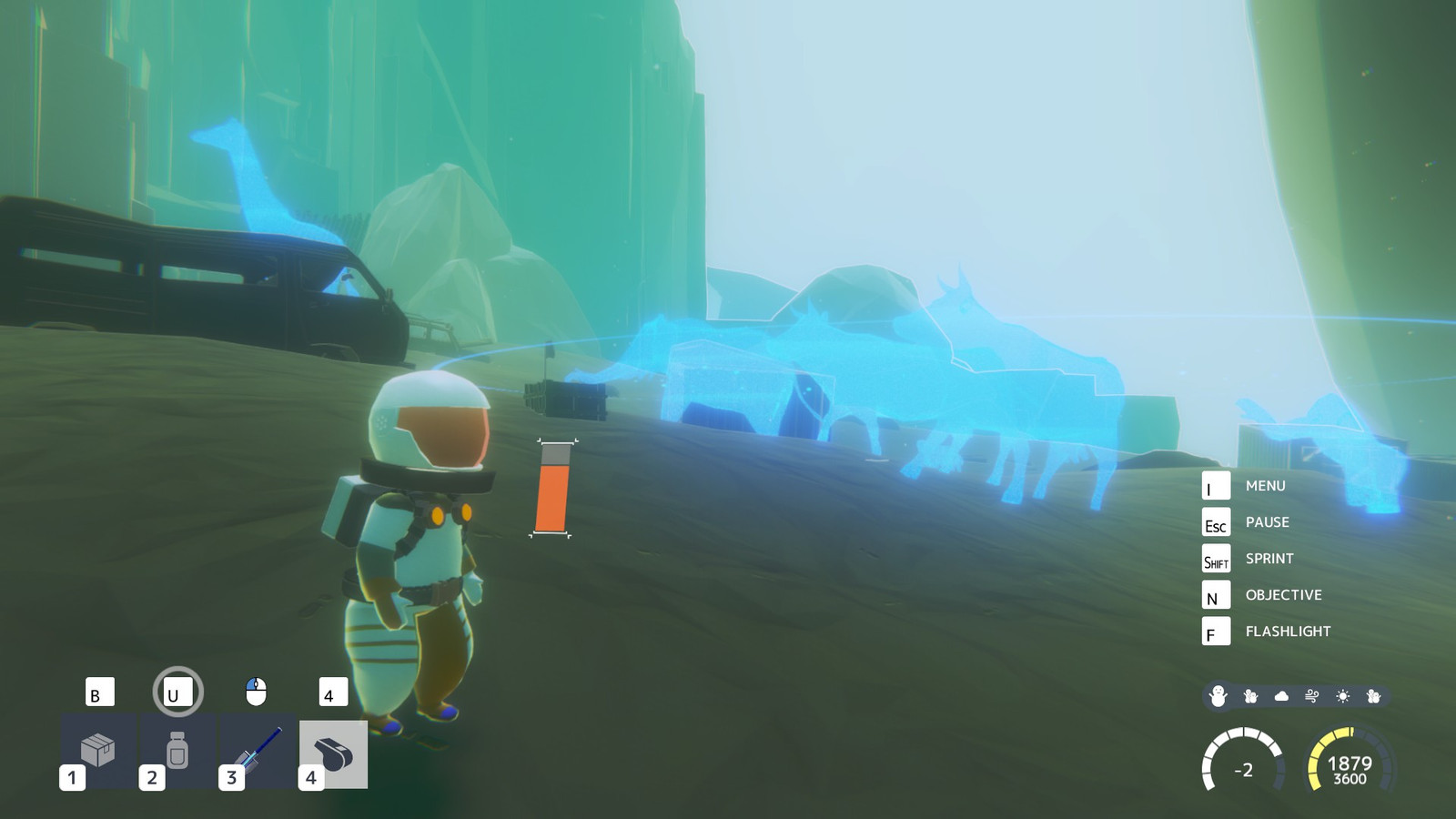
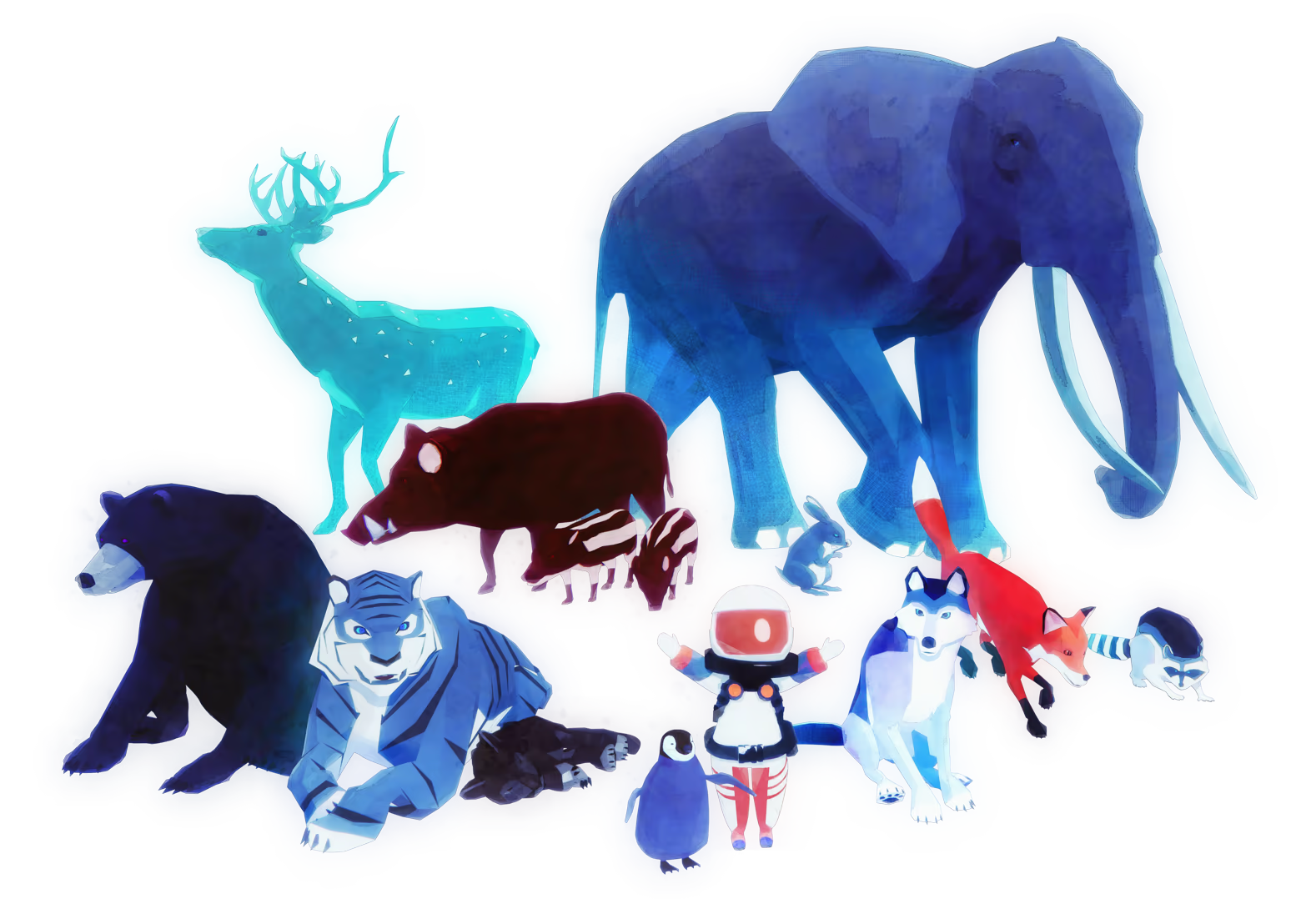
The best parts of Nova Antarctica revolve around the animals you’ll meet throughout the many days spent navigating the terrain towards the South Pole and the tales you uncover along the way. I am still playing through the campaign, but so far I’ve met and befriended a penguin and a wolf, both of which provided instantly invaluable utility to me that changed how the game played fundamentally. Your animal partners can be whistled in at any time with a quick key press, which is super helpful, and are used for things like helping to maintain your body temperature (holding the penguin) or traveling along the ground quicker (riding on the wolf.) I have only just begun to use the wolf, but if his usefulness can be anything like the penguin, which allowed me to finally move forward through snowstorms instead of just having to hole up in them, I can imagine my adventuring through the snowy scenes is about to become much more speedy. There are quite a few furry friends left for me to meet up with in the game, and I’m looking forward to seeing their stories, which the game does a great job of illustrating through simple cutscenes, glances, animations, and other creative ways. In fact, the overall story and way they go about illustrating it is really nifty, as you’ll find these techy projection devices that give glimpses into what happened in the lands before you arrived and led to the destruction and desolation you observe on your journey. There’s a lot more of these moments than I expected, and they felt like apt rewards after dragging yourself further and further across the Continent.
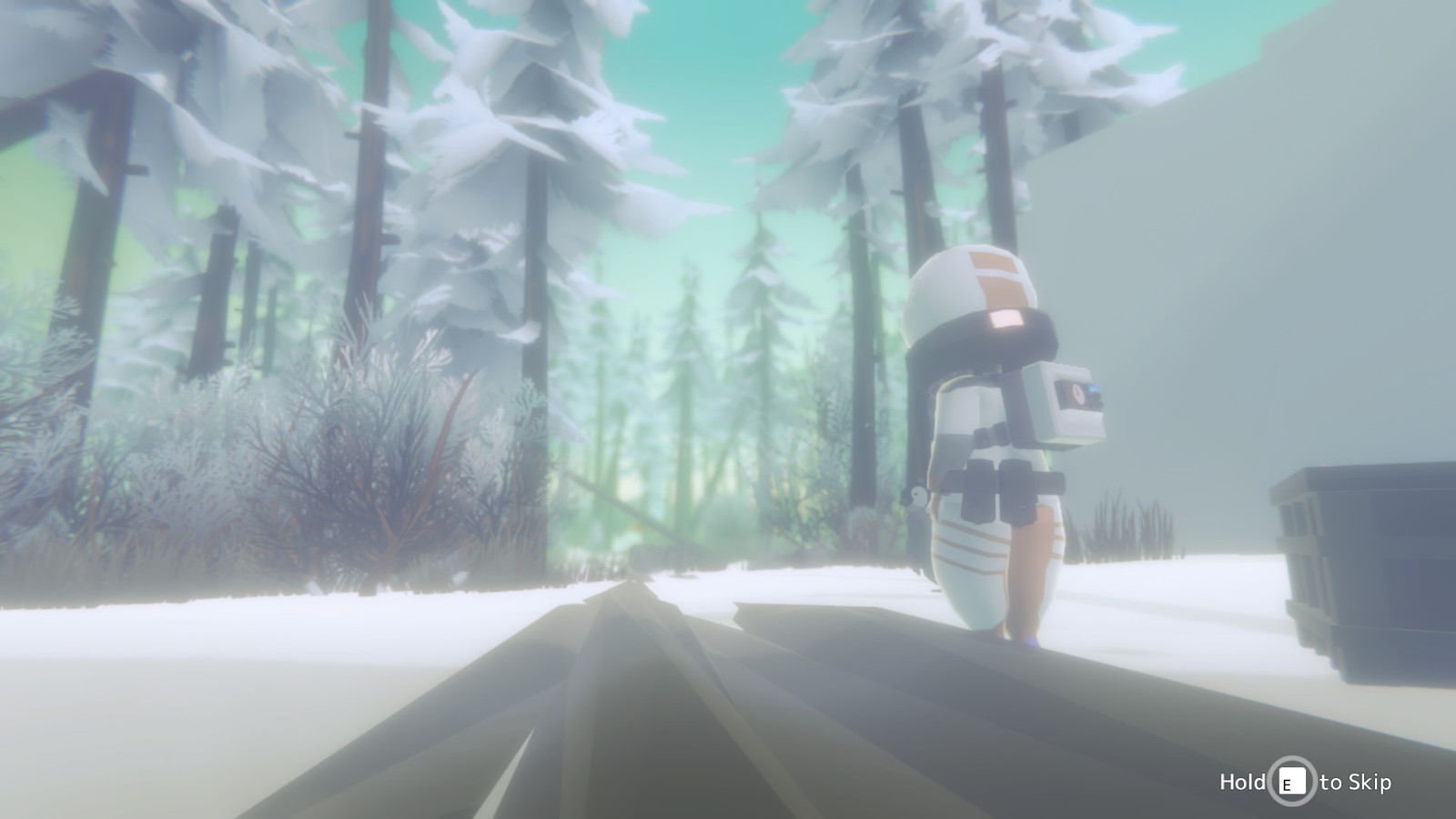
Visually, there’s not too much to crow about here, as these types of colors, simple lands, and basic character designs aren’t meant to dazzle and amaze. What they do accomplish is keeping things basic for exploration purposes. There wasn’t too much to look at that wasn’t important, and I was able to recognize notable shapes even through harsh weather effects or from a far way distance. The game also does have its visual moments of splendor, as the color palettes chosen for the individual levels are well intentioned and flow with the cold, dense, and foggy effect they’re trying to go for in each environment. Some cutscenes also impressed me with their cinematic designs and use of camera work to convey feelings or story beats. It surprised me at various points with how the “indieness” of everything sometimes crossed over from rough around the edges to some really cool ideas being implemented.
The menu UI and helpfulness of guidance could be improved, as inventory management and building can be confusing for a while until you just work with it enough to understand how it functions. It felt less natural than most games, and a bit clunky, especially with how materials were used to craft other materials that were then used simply to create another material, all within a couple building screens. Again, this wouldn’t be a huge issue if you weren’t potentially dying during all of this item and building management, but alas, you’re in the Arctic Circle, so you play with the cards you’re dealt. A quick note that the audio design is appropriate for the environment, with some pretty musical arrangements rising up at some key points in the story and game, but with some other minor annoyances like harsh hazard warnings and unforgiving weather effect noises. Overall it didn’t detract from the game, and I appreciated that some tangible effort was put into its implementation.

I’m only in the first few Acts of this game, but I can see where the game decided to go heavy on the survival challenges up front so that as you start to make things easier for yourself by teaming up with these animals, you can truly appreciate the usefulness they’re giving to you. This is usually a daring strategy, especially for an indie game with, let’s be honest, “okay” visuals, because people aren’t likely to stick it out if you make it way too challenging up-front without a good kickback of rewards. Credit to developers RexLabo and PARCO GAMES though, as it is eventually pretty satisfying and enjoyable to play. Admittedly, I wasn’t sure I would make it through to where I felt I had played enough to review the game, but things really started to pick up the pace and intrigue by the end of Stage 1, and by Stage 2 I could finally see the vision the developers had. I just wish I could’ve reached that point sooner. At the end of the day, I believe the journey is just beginning for these developers, and the adventure is worth picking up and exploring, even with its blemishes.

Thanks to the developers for a Review key | Nova Antarctica is available on Steam